Report: 662 Nigeria Projects Abandoned Despite N30 Billion in Public Funds
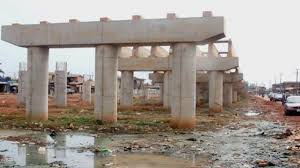
A recent analysis by Tracka, a civic accountability platform of BudgIT said that at least 662 federally funded capital projects in Nigeria have stalled, been abandoned, or remain unfinished despite receiving over ₦30 billion in public cash.
Tracka’s 2024/2025 study, “The People and Government Oversight: Connecting the Dots in Service Delivery,” which was released on Wednesday, February 4, includes the disclosure. Osiyemi Joshua, Head of Tracka, presented the results during the report’s Abuja launch.
Over a 13-month period, the study monitored 2,760 capital projects in 30 states, totalling ₦2.26 trillion in allocations.
However, Tracka’s verification showed that only about half of these projects were completed, while 1,322 projects were found to be ongoing—mostly at a slow pace—abandoned, unexecuted or delivered in ways that failed to meet basic standards.
Tracka noted that multibillions naira remain tied to projects that never materialised or have been left in limbo.
For instance, N15.07 billion was reported to have been disbursed for 92 fraudulent projects out of the allocated N15.36 billion.
Also, 471 projects were confirmed to be unexecuted despite payment of N7.60 billion. For 99 abandoned projects, N8bn was disbursed.
This, according to the Osiyemi, has continued to deprive communities of essential infrastructure such as schools, health facilities, roads and water systems.
According to the organisation, the problem is not merely slow execution but a deeper breakdown in transparency, planning and accountability.
Speaking at the event, BudgIT’s Executive Director, Oluseun Onigbinde, said public budgets should not be viewed as abstract figures detached from people’s daily realities.
“Why do we do this? When I was speaking to my team members yesterday, I said budgets are not about numbers, they are about lives, they are about roads, they are about schools, they are about people,” Onigbinde said.
He warned that the inclusion of projects in the budget does not guarantee delivery, particularly in the absence of active citizen oversight.
“It’s very, very important for people to understand this element of things—that because it’s in the budget does not mean it will happen,” he said.
Onigbinde explained that Tracka’s work over the years has focused on turning the budget into what he described as a “living object” that citizens can monitor and engage with, rather than a document filled with figures that fail to translate into outcomes.
He also pointed to what he described as a paradox in state finances, noting that many state governments currently have more funds at their disposal but continue to struggle with project delivery.
According to him, one of the persistent challenges identified in Tracka’s findings is the growing dependence on constituency, or zonal intervention, projects, which often weaken accountability and allow core responsibilities to be neglected.
“The real problem, as we see in most of our reports, are the constituency projects. You realize that this constituency project is becoming a problem because somehow it allows state governments to abandon their own respective work,” Onigbinde said.
He cited primary healthcare as a key example, noting that even critical social services have suffered as a result.
“If I was supposed to be the role model, the primary healthcare, we see that most of our hospitals are abandoning that. Our interest is to make sure that we pay attention to all of this,” he said.
Tracka’s verification of the federal government’s PHC revitalisation programme revealed that while some facilities showed visible improvements, many remained under construction or continued to operate in degraded conditions despite being listed for funding.
It noted that in several communities, residents reported little or no evidence of intervention.
Beyond health, the report also flagged widespread solar-powered constituency projects, many of which were vague, lacking detailed information.
He added that poor planning and weak evaluation continue to undermine service delivery nationwide.
“What exactly is missing in service delivery for this country is that we’re so big on spending. We do too little on planning and we do too little on evaluation,” he said.
Tracka warned that unless project locations, disbursement data and implementation timelines are made fully transparent, Nigeria risks repeating a cycle where budgets expand but public benefit remains elusive.
The organisation called for stronger oversight mechanisms, including real-time monitoring of projects, clearer disclosure of contractor information and stricter consequences for abandoned or fraudulently executed projects.